
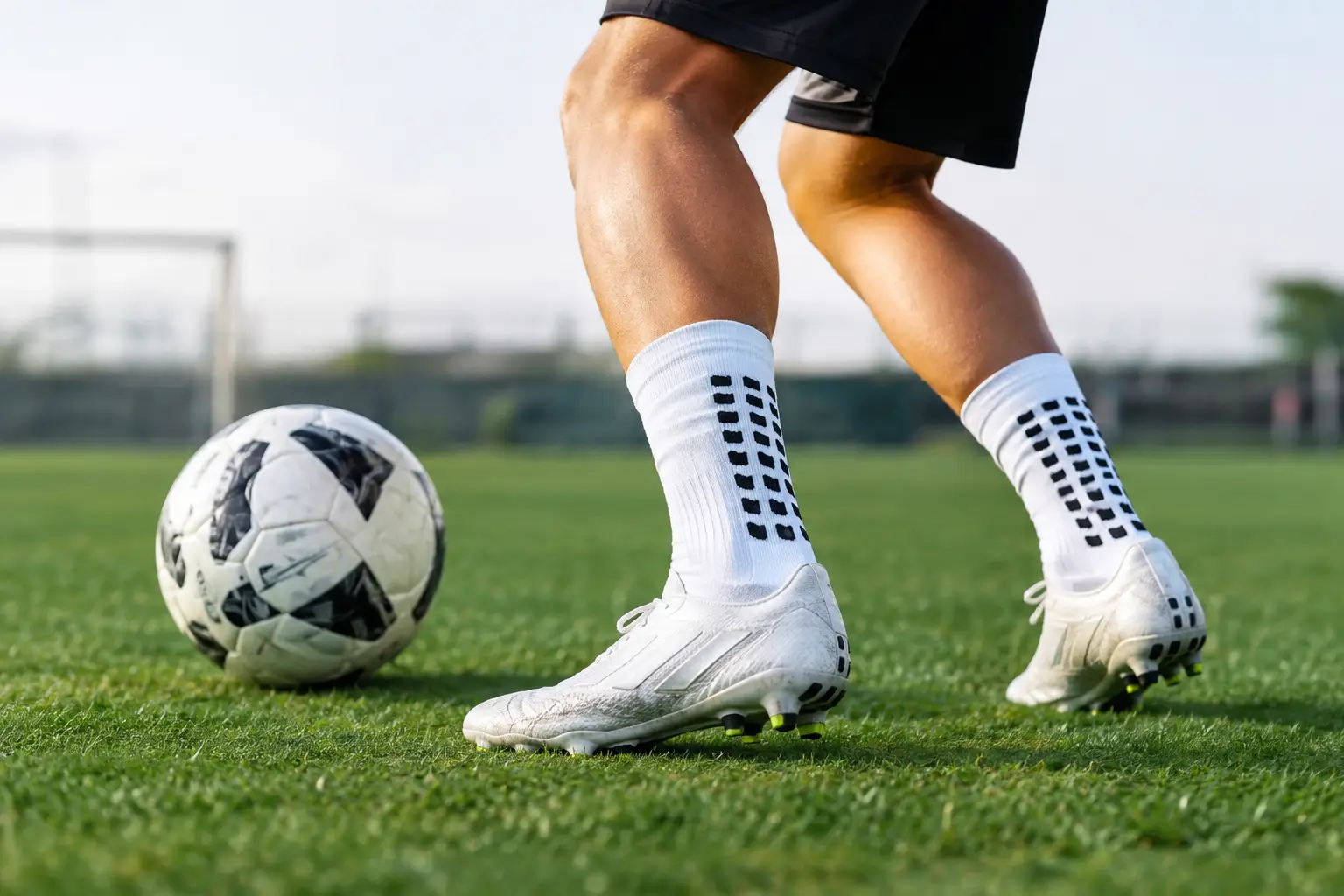
A player changes direction to press, their foot slides inside the boot, and the next touch is loose. That is the problem grip socks are designed to address. But are grip socks legal in football? In most cases, yes. The key point is that football Laws and competition rules regulate what is visible, safe and compliant as part of your kit - not whether a sock has grip inside it.
For Australian players, the practical answer is simple: grip socks are generally fine for training and matches when they are worn in a way that meets your team’s kit requirements and the referee has no concern. The details matter most in organised competition, where outer socks, tape colour and sponsor or league rules can come into play.
Are Grip Socks Legal Under Football Laws?
The Laws of the Game require players to wear socks as part of their basic equipment. They also give referees the authority to check that equipment is safe and does not create an unfair or unsafe situation. Grip socks do not normally cause either issue.
There is no general Law that bans silicone or rubber grip elements inside a football sock. The grips sit against your foot or boot interior, helping reduce movement inside the boot. They are not a hard external accessory, and they do not affect another player. For that reason, a standard pair of performance grip socks is usually permitted.
The complication is not the grip technology. It is how the sock looks once you are fully dressed in your team kit.
Many players wear full-length grip socks in their club colour. Others wear grip socks underneath their match socks, often with the outer socks cut above the ankle and taped in place. This setup can be accepted, but it still needs to comply with the competition’s rules on sock colour and visible tape. If a referee sees a mismatched lower sock, contrasting tape or excessive branding that conflicts with a uniform rule, they may ask you to adjust it before kick-off.
The Difference Between Legal and Competition-Compliant
“Legal” is often used loosely by players. There are two separate questions to ask.
First, is the product allowed under the Laws of the Game? Grip socks usually are. Second, does your league, club, school, academy or tournament allow the way you are wearing them? That depends on its competition regulations and team-kit policy.
Local senior football, NPL environments, school competitions and representative tournaments can all apply kit standards differently. A social league may only care that you are wearing shin pads and suitable footwear. A higher-level competition may expect every visible part of the sock to match the registered team colour.
Your coach or team manager should know the club expectation. For finals, trials and representative games, do not assume a setup that passed at training will pass a pre-match inspection. Take compliant outer socks and matching tape with you. It is an easy solution that avoids changing gear in a rush on the sideline.
What referees are likely to check
A referee is not usually inspecting whether your socks have grip pads. They are looking for the practical issues that fall under equipment and presentation rules. These include whether shin pads are covered by socks, whether tape or material on the outside of the sock matches the sock colour, and whether anything presents a safety concern.
If you have cut your team socks, the sock worn underneath may become visible around the calf or ankle. Where that lower sock does not match the team sock, it can be flagged. The same applies to bright white, black or coloured tape on a contrasting team sock.
Referees also have discretion at grassroots level. One official may be relaxed if the overall kit is tidy; another may apply the competition standard strictly. Being prepared is more useful than arguing the point five minutes before kick-off.
Wearing Grip Socks the Right Way
The cleanest option is a full-length grip sock that matches your club’s approved sock colour. It gives you the secure fit you want without creating a visible kit issue. Check that your shin pads remain covered and that any tape used externally matches the sock.
If you prefer the cut-sock setup, start with a performance grip sock that fits snugly from heel to calf. Wear the club sock over it, cut only if your competition permits it, then secure the join with tape in the same colour as the outer sock. The aim is a stable, professional finish, not a loose overlap that moves during the match.
Avoid making changes for the first time on match day. Test the full setup in training: boots, shin pads, grip socks, outer socks and tape. A sock system that feels perfect standing still can bunch behind the heel, expose the shin pad or create pressure across the toes once you are sprinting and striking the ball.
Fit matters as much as grip
Grip socks should be close-fitting, but not restrictive. If they are too large, the grips cannot hold the foot consistently and the fabric can wrinkle under the sole. If they are too tight, they can create pressure points and make your feet uncomfortable late in a session.
Choose the right size for your foot rather than relying on a one-size approach. Put them on properly, with the heel pocket sitting in the correct position before you pull on the boot. If the sock twists, the grip pattern will not sit where it is intended to work.
Also consider the boot fit. Grip socks add a small amount of material compared with a thin standard sock. Players in very tight boots may need to reassess their fit rather than force a thicker sock into a boot with no spare room. Secure lockdown is the goal. Numb toes, rubbing or excessive compression are not.
Can Grip Socks Give You an Unfair Advantage?
No, not in the sense that football regulations normally prohibit. Grip socks improve the connection between your foot and your boot by reducing internal slipping. They do not alter the ball, the surface, the studs or the opponent’s equipment.
That said, they are not a substitute for properly fitted boots, quality insoles where needed, or sound movement mechanics. If your heel is lifting significantly, your boot may be too large, too wide or poorly laced. Grip socks can improve the feel, but they cannot fix the wrong boot shape.
Their value is most noticeable during sharp changes of direction, repeated accelerations and wet-weather sessions, when feet can move more inside the boot. For players who train several times a week, a reliable sock setup can also make preparation more consistent. You know how your boots will feel before the first sprint.
A Quick Match-Day Check
Before leaving for a game, make sure your grip socks work with the rest of your approved kit. Check your shin pads are fully covered, your outer sock colour is correct, and any visible tape matches. Pack a spare set of standard club socks in case the referee or team manager asks for a change.
For players using a cut-sock setup, inspect the join after your warm-up. If the tape is rolling, the outer sock is sliding down or a contrasting sock is showing, fix it before the team walkout. Small kit issues are avoidable distractions.
When You Should Ask First
Ask your coach, manager or competition organiser before wearing grip socks if you are playing in a school event, a televised fixture, a representative side, a tournament with strict uniform rules, or any match where the club supplies a complete kit. These environments may have presentation requirements beyond the basic Laws of the Game.
The same applies if your grip socks have prominent branding or an unusual colour. Neutral, team-coloured options are the safest choice when uniform standards are tight.
Grip socks are performance equipment, not a problem for officials. Set them up properly, keep the visible kit compliant, and put your focus where it belongs: your first touch, your movement and the next action.