
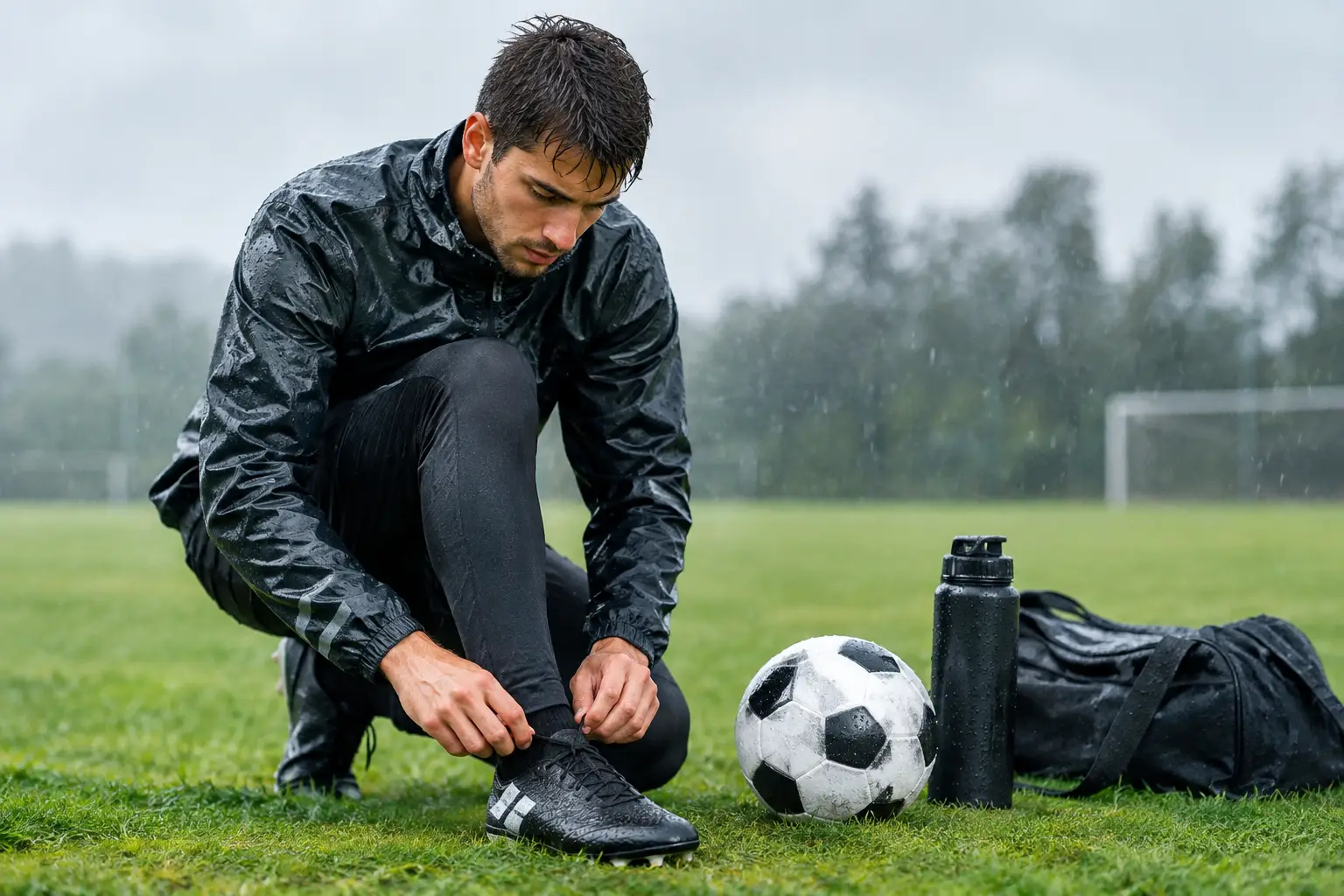
A wet pitch exposes loose fit, worn boots and poor preparation quickly. The right football gear for wet weather will not make a flooded surface easy, but it can help you stay secure, comfortable and focused on the next action rather than your footing.
For committed players, rain is not a reason to lower standards. It is a condition to prepare for. Training still matters, fixtures still go ahead, and the details in your kit bag can influence how confidently you press, turn, tackle and receive under pressure.
Start with traction and boot stability
Your boots are the first decision. Wet grass reduces the margin for error, especially when you are changing direction, decelerating or striking through the ball at pace. Stud configuration needs to suit the surface, not just the boots you normally wear.
On soft natural grass, a soleplate with longer or more aggressive studs can provide better purchase than a firm-ground setup. On a pitch that is merely damp and holding together, a firm-ground boot may still be appropriate. The right choice depends on how deep the surface is, how much grass cover remains and whether the ground is cutting up during the match.
Do not assume more grip is always better. Studs that are too long for a firm surface can feel unstable and place extra stress through the foot and ankle. Check your competition rules as well, particularly if you use replaceable studs. A quick inspection before warm-up is better than discovering your boots are wrong once the game has started.
Boot care matters after the final whistle too. Remove mud with cool water and a soft brush, take out the insoles if possible, and let boots dry naturally away from direct heat. Leaving saturated boots in the boot of the car for days can damage the upper, harden the material and leave you starting the next session with less comfort and control.
Grip socks matter more on wet days
Wet conditions can make small movement inside the boot more noticeable. Once your socks are damp, friction changes, the foot can shift during sharp movements, and hot spots can develop faster. That is where a secure sock system earns its place.
Grip socks are designed to help reduce internal slip between your foot, sock and boot. For players who rely on explosive first steps, repeat sprints and quick changes of direction, that locked-in feeling is valuable when the pitch is already taking traction away from you.
Fit is critical. Socks that bunch under the arch or slide down the calf will distract you regardless of their grip pattern. Choose a close, secure fit without restricting circulation, and test the full setup in training before wearing it in a key fixture. If you wear team socks over grip socks, make sure the combination does not create excess bulk around the heel or forefoot.
Bring a dry spare pair. This is a simple addition to your match-day routine, but it can make a genuine difference at half-time or after a session. Changing into dry socks gives your feet a reset and reduces the time they spend in a cold, saturated boot.
Build layers for the warm-up, not bulk for the match
The best wet-weather clothing keeps you ready to move. It should not leave you overheated, restricted or carrying unnecessary water once the rain starts.
A lightweight, moisture-managing base layer is useful in cold rain, particularly for warm-ups, substitutes and recovery after the session. It adds warmth without the bulky feel of a heavy cotton top. Cotton absorbs water, becomes heavy and stays cold against the skin. For football, that is usually a poor trade-off.
A water-resistant outer layer is most useful before kick-off, during drills where you are waiting your turn, and after the match. Take it off when the intensity rises if it limits your movement or traps too much heat. A jacket is preparation gear, not something to rely on through a full competitive match.
Your playing kit should remain close-fitting and practical. Loose layers catch the wind, hold water and make movement feel slower. In heavy rain, accept that your match shirt and shorts will get wet. The goal is not to stay perfectly dry. The goal is to maintain body temperature, range of motion and concentration.
Goalkeepers need a different setup
Keepers spend more time exposed to the rain with less continuous running to stay warm. A fitted base layer can help, while a spare towel and dry top for half-time are practical additions. Gloves need attention too: wet palms change how the ball feels, so clean gloves before the match and follow the manufacturer’s care guidance rather than using random products that can affect the latex.
Prepare your kit bag for rain
Wet-weather preparation is not just what you wear. It is how you organise what comes off after training and what you need next.
Use separate compartments or waterproof bags for clean gear, wet gear and valuables. Keep a dry towel, spare socks, underwear, a base layer and a plastic bag for muddy boots. A second pair of boots can be useful if you train and play across different surfaces, but it is only worth carrying if both pairs are broken in and suitable for the conditions.
A small amount of organisation protects the gear you have invested in. It also saves the frustrating post-session scramble for dry clothes while rainwater and mud spread through everything in the bag.
For younger players travelling with a parent or teammate, label your equipment and keep the essentials together. It is easy for socks, shin guards and training tops to disappear in a crowded changing room when everyone is trying to get dry.
Keep your standards when the pitch gets difficult
Rain changes football. Passes can hold up in the grass, the ball can skip unexpectedly, and first touches need more awareness. Your equipment should support those adjustments rather than add another problem to solve.
Prioritise secure boots, reliable grip socks, light layers and dry spares. Then train with the same intent you bring to a dry night under lights. Wet sessions are an opportunity to sharpen your balance, body position and decision-making when the game becomes less predictable.
A practical football gear for wet weather checklist
Before leaving for training or match day, check that you have:
- Boots suited to the expected surface and allowed by your competition
- Secure grip socks, plus one dry spare pair
- Shin guards that stay in place under wet socks
- A lightweight base layer and water-resistant outer layer for before and after play
- A towel, dry change of clothes and separate bag for wet boots and kit
- Water and post-training gear, even when the weather feels cold
Hydration is easy to overlook in rain. You may not feel as thirsty as you do in summer, but hard running still costs fluid. Keep drinking as part of your normal routine.
Pro Pitch Football is built around the essentials players use to prepare properly, including grip socks designed for a more secure fit in the boot. Choose gear that earns space in your bag through performance, not appearance.
When the forecast turns, pack with intent. A dry pair of socks, the right traction and a clean post-session routine will not change the weather, but they can keep it from changing your standard.