
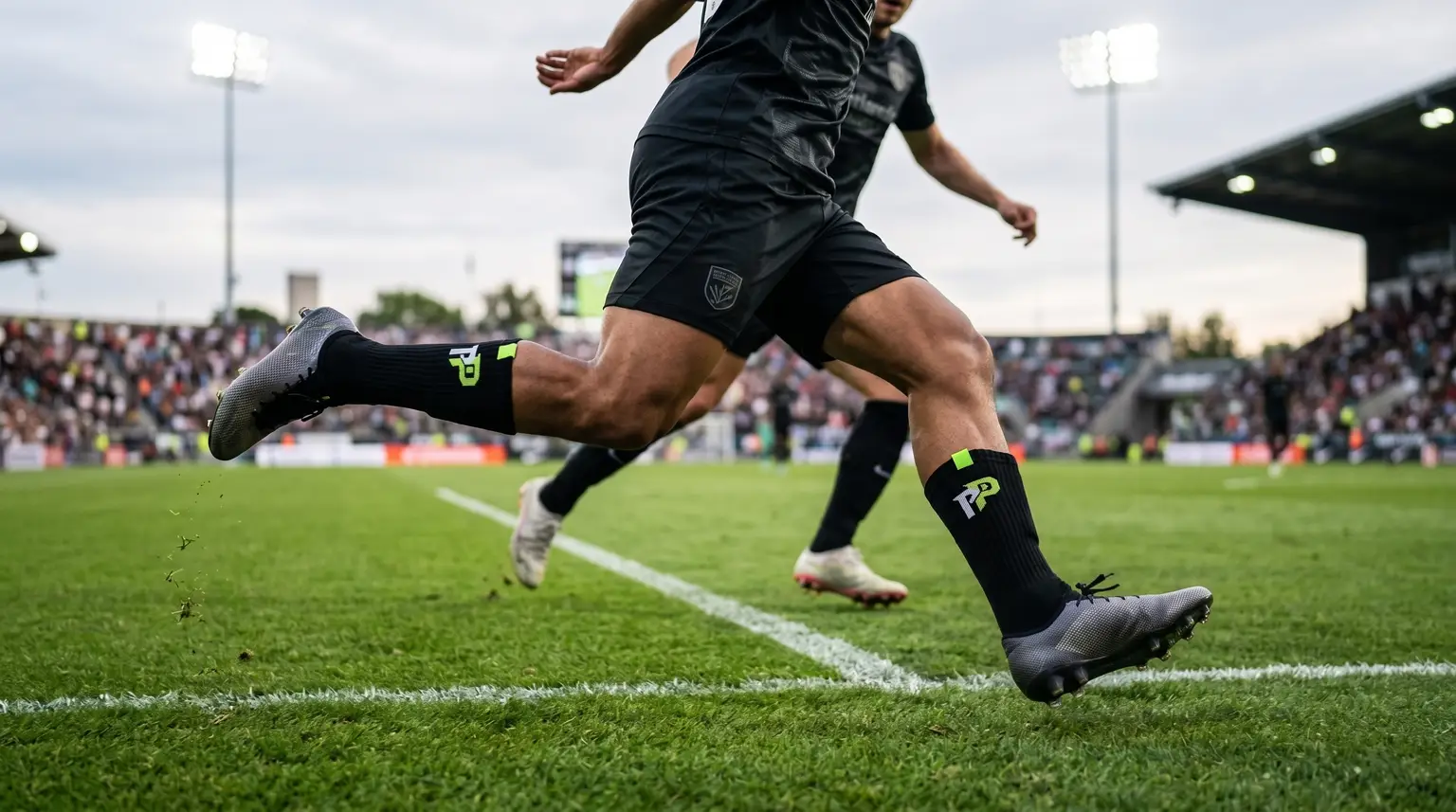
A sharp change of direction starts before your studs meet the turf. If your foot is sliding inside the boot, even slightly, you can lose the stable platform needed to accelerate, press, receive under pressure or strike cleanly. Football grip socks are built to reduce that internal movement, giving committed players a more secure connection between foot and boot.
They are not a replacement for properly fitted boots, strong ankles or good movement mechanics. They are a practical piece of match and training kit that can improve comfort and consistency when the fit is right.
What football grip socks actually do
Grip socks use textured grip zones, usually on the sole and sometimes around the heel, to create friction between your foot, sock and boot. The objective is simple: limit unnecessary movement inside the boot.
During football, your feet are repeatedly loaded through sprinting, braking, cutting, landing and striking. A standard sock can allow the foot to shift as those forces change. That movement may be small, but it can contribute to a less locked-in feeling, hot spots and distraction when the match speeds up.
A quality grip sock helps hold the foot in position. For a winger driving down the line, that can mean more confidence planting to change pace. For a midfielder constantly opening their body to receive, it can support a more stable feel through the boot. For defenders, it matters when reacting late, jockeying and making a hard recovery run.
The benefit is not that grip socks make a player faster by themselves. The value is in reducing one variable that can get in the way of secure movement. When your equipment stays consistent, your attention can stay on the next action.
Why internal boot movement matters
Most players have felt it: a boot that feels fine in the changeroom but starts to move once the session becomes intense. Moisture, worn sock fabric, a slightly roomy boot or a poor sock-to-boot combination can all make that feeling worse.
Internal movement is most obvious at the heel and forefoot. Heel lift can create rubbing and blisters, while forward slide can make the toes jam during hard stops. Neither problem helps when you are playing on firm ground, wet grass or artificial surfaces where every step needs to be decisive.
Grip socks can also make a familiar pair of boots feel more settled. That does not mean they can fix boots that are too big, too narrow or badly worn. If there is major space around the heel or toe box, sizing remains the first issue to solve. Grip socks work best as part of a properly fitted setup, not as a workaround for poor fit.
Football grip socks for training and match day
Training is where players often notice the difference first. Repeated sprint work, small-sided games and change-of-direction drills place plenty of demand on the foot inside the boot. If your feet feel secure throughout a hard session, you are less likely to adjust your socks, retie your boots or think about rubbing between drills.
On match day, the priority is reliability. You want equipment that feels familiar from the warm-up through to the final sprint. Wearing the same grip sock setup in training gives you a clearer sense of how your boots respond, particularly if you rotate between firm-ground and artificial-ground pairs.
Conditions matter too. In wet weather, sweat and moisture can increase the chance of unwanted movement inside the boot. Grip zones can help maintain a more planted feel, although no sock will remove every effect of a soaked boot or heavy pitch. Keep expectations practical: the aim is better control of your setup, not a miracle fix for poor conditions.
Choosing the right pair
The best choice comes down to fit, fabric and how you prefer to wear your football socks. A grip sock should feel close and supportive without compressing the toes or creating pressure around the calf. If the sock bunches at the heel or under the arch, the size or shape is wrong for you.
Look for grip placement that covers the areas most likely to move inside the boot. A well-designed sole pattern provides traction under the heel and forefoot without feeling bulky. The sock should also retain its position during repeated running, rather than rolling down or twisting after a few hard efforts.
Fabric balance matters. A thicker sock can provide cushioning and a more substantial feel, but it may make a snug boot feel too tight. A lighter sock can suit players who want maximum boot feel, though it may offer less padding on firm surfaces. There is no universal answer. Your boot fit and personal preference should decide it.
For players wearing team socks, grip socks are commonly used underneath with the foot section of the outer sock cut away. This creates the grip-sock-to-boot connection while keeping the club colour visible above the ankle. If you use this setup, make sure the join is secure and comfortable. Tape that is too tight can restrict circulation, while a loose overlap can shift during the match.
Get the fit right before kick-off
Put grip socks on flat, with the heel pocket properly aligned before you lace your boots. Do not leave excess material under the arch or around the toes. Those folds can become pressure points once you start sprinting.
Lace the boot as you normally would, then walk, jog and make a few sharp changes of direction before training. Your heel should feel held without being pinched. Your toes should have enough room to spread naturally and should not hit the front of the boot when stopping.
If the boot suddenly feels restrictive with grip socks, do not force it. You may need a thinner construction, a different sock size or a reassessment of your boot fit. Tightness is not the same as security. The right setup should feel stable while allowing the foot to work naturally.
When grip socks may not be the answer
Players sometimes buy grip socks to solve discomfort that comes from another source. Persistent blisters can be caused by worn heel linings, boots that are too large, boots that have not been broken in correctly or a change in training load. A new pair of socks may help, but it is worth finding the underlying issue.
Likewise, foot pain, numbness or repeated ankle problems deserve more attention than an equipment change. Check your boots, talk to a qualified health professional if needed, and avoid playing through symptoms that keep returning. Performance gear should support preparation, not mask a problem.
Some players also simply prefer a standard football sock. If your current setup is comfortable, stable and proven over a full match, there is no need to change it for the sake of it. Grip socks are most useful when they address a real issue: sliding, rubbing, inconsistency or a lack of confidence in the boot.
Make them last through the season
Grip material performs best when it is looked after. Turn socks inside out before washing, use a cool wash and avoid high heat in the dryer. Heat can wear down elastic fibres and reduce the life of grip detailing over time.
Keep more than one pair in rotation if you train several times a week. This gives each pair time to dry fully and means you are not relying on damp gear for a late session or weekend fixture. Inspect the heel, toe and grip zones regularly, especially if you train on artificial turf where abrasion can be higher.
Pro Pitch Football is built around the essentials that help players prepare with purpose. Grip socks are a small part of that preparation, but small details matter when your game depends on repeatable movement.
The right pair should disappear once the whistle goes. Your feet feel secure, your boots feel familiar, and the next turn, tackle or sprint gets your full attention.