
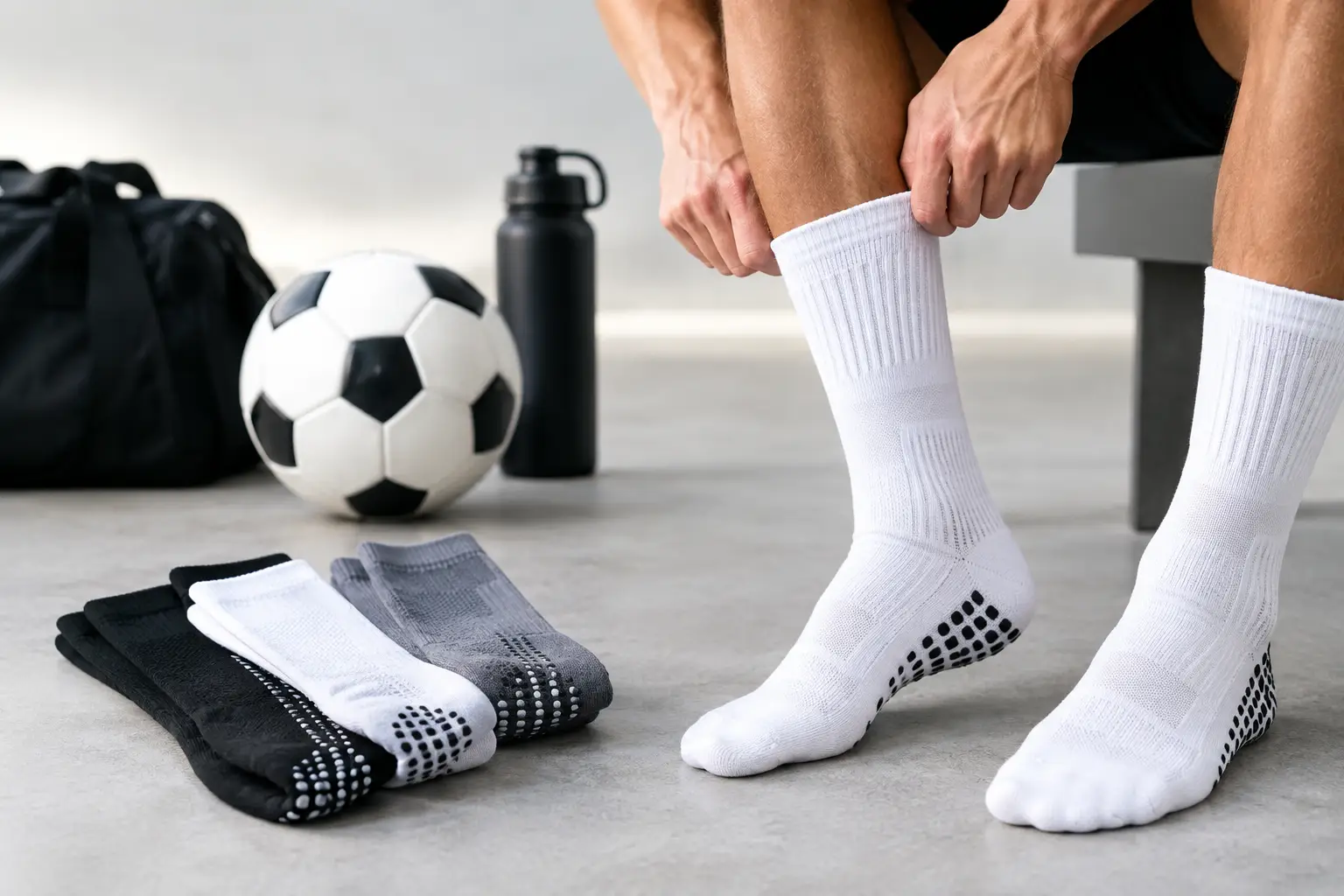
A grip sock that moves inside your boot changes more than comfort. It can create hot spots, bunch at the heel and leave you adjusting your footwear when you should be focused on the next action. This football grip socks sizing guide helps you select a secure, match-ready fit for training and match day.
Grip socks should feel close and stable from the first wear, without crushing your toes or restricting your ankle. The right size supports the job the sock is designed to do: reduce unwanted foot movement inside the boot so you can plant, turn and accelerate with confidence.
Start With Your Football Boot Size
Your usual football boot size is the most useful starting point when choosing grip socks. Grip sock sizing is generally based on shoe-size ranges, so select the range that includes the size you wear in your best-fitting boots.
Use the size chart shown with the specific product rather than assuming every grip sock uses the same range. Sizing can differ between brands and constructions, particularly where fabric thickness, compression and grip placement vary. If you wear different boot sizes across brands, go by the boot you wear most often for football, not a casual trainer size.
Your boot fit matters here. Players who wear a close, performance fit in their boots will usually want grip socks that feel equally close. A loose sock inside a close-fitting boot can fold under the foot. A sock that is too thick or too small can make a boot that normally fits feel tight across the forefoot.
Football Grip Socks Sizing Guide: Check the Fit
Put both socks on properly before deciding whether the size is right. Pull the sock over the heel, smooth the material through the arch and ankle, then stand and walk a few steps. The grip zones should sit flat against your foot, with no twisting through the sole.
A correctly sized grip sock feels snug around the foot and ankle. It should not slide down during movement, leave excess material at the toes or create folds under the heel. Mild compression is normal. Numbness, tingling or pressure that remains after a few minutes is not.
Check four areas before training:
- Toes: There should be enough length to fully extend your toes without the fabric pulling hard against the end of the sock.
- Heel: The heel pocket should sit directly around your heel, not halfway up the back of your foot or under the arch.
- Arch and sole: Grip elements should lie flat. Any bunching here can become uncomfortable during repeated sprints and changes of direction.
- Cuff: The cuff should stay in place without digging into your calf or ankle.
Test the socks inside your football boots, not just on the floor at home. Lace your boots as you would for a match, make a few sharp turns, rise onto your toes and perform a short acceleration. This is the quickest way to spot pressure points or excess movement.
If You Are Between Sizes
Being between sizes does not always mean you should automatically size down. The best choice depends on your foot shape, boot fit and how you prefer your socks to feel.
Choose the smaller option when you have a narrow foot, wear a tight boot fit and prefer a firm, locked-in feel. A smaller size can reduce excess material, provided your toes are not compressed and the heel stays correctly positioned.
Choose the larger option when you have a wider foot, higher instep or muscular calves, or when your boots already feel close across the forefoot. The larger size can give the fabric enough room to sit smoothly rather than overstretching across the foot.
Do not select a larger size simply because you expect grip socks to shrink. Quality performance socks may settle slightly after washing, but buying too large usually causes the exact movement you are trying to remove. Start with the stated shoe-size range and assess the fit in your boots.
Full-Length Grip Socks and Cut Socks
The fit process changes slightly depending on the grip sock style you use. Full-length grip socks are worn as a complete football sock, with the foot, ankle and lower leg all in one piece. The foot sizing principles remain the same, while the cuff should sit securely without restricting the calf.
Some players use grip socks with cut team socks or sock sleeves to match club colours. In this setup, the grip sock must still fit the foot precisely. The outer sock or sleeve should sit over it without pulling the grip sock out of position.
Avoid layering multiple thick socks over a grip sock. Extra layers can alter your boot fit, create heat and introduce movement between fabrics. If you need a particular match-day look, use a compatible outer sock or sleeve rather than forcing a thick football sock over the top.
Signs Your Grip Socks Are Too Small
A smaller, tighter fit is not automatically better. Grip socks work when their grip zones maintain contact with your foot and boot. If the sock is stretched too far, it may become uncomfortable and wear faster.
Your grip socks may be too small if your toes feel cramped, the heel section will not settle over your heel, or the cuff leaves deep, painful marks. You may also notice the fabric becoming overly thin across the ball of the foot or the top of the toes. That level of tension will not improve traction.
Pay attention after a full session. A fit that feels fine while standing can become restrictive after repeated running, especially in warm conditions when feet swell. If you finish training with numb toes or persistent pressure along the forefoot, reassess the size and the boot combination.
Signs Your Grip Socks Are Too Large
Grip socks that are too large are easier to identify once you move at speed. Excess fabric tends to collect where it causes the most problems: under the toes, around the heel or through the arch.
You may be wearing a size too large if the heel pocket sits above your heel, the sock rotates inside the boot, or you can pinch a noticeable amount of loose material at the toe. Sliding or creasing can lead to rubbing, particularly during long sessions on firm pitches.
Do not try to fix an oversized sock by pulling it excessively tight at the cuff. This often shifts the heel pocket and leaves more fabric under the foot. A better fit starts with the correct foot length and a smooth, even pull from toes to ankle.
Fit for Different Boot Types
Boot construction affects how a grip sock feels. Speed boots usually have a close, streamlined shape, so players wearing them often notice even small changes in sock thickness or sizing. A precise sock fit is especially useful here because there is less spare volume inside the boot.
Leather boots can soften and give over time, while synthetic boots may retain a more structured feel. If your boots have stretched slightly through the season, a well-fitted grip sock may help take up minor space. It will not solve a boot that is genuinely too large, however.
For players using wider boots, focus on eliminating folds rather than chasing maximum compression. For players in narrow boots, make sure the sock does not add enough bulk to create pressure across the toes. The goal is secure foot-to-boot contact, not the tightest possible fit.
Keep the Fit Consistent
Wash grip socks after use according to the care instructions on the product. Sweat, grass and residue can affect how the fabric feels over time, while poor washing habits can reduce elasticity. Turn them inside out if instructed, avoid excessive heat and allow them to dry naturally where possible.
Do not share grip socks between players with different foot sizes. Even when the stated range overlaps, repeated stretching to another player's foot shape can change the fit. For regular football, it is worth having more than one pair so you always have a clean, dry option for training and match day.
Before a fixture, put your full kit on early enough to check the complete setup: grip socks, outer socks if required, shin pads and boots. Small fit issues are simple to solve before warm-up and frustrating to manage once the match has started.
The right pair should disappear from your attention once you step onto the pitch. Choose the size that sits flat, stays secure and lets your boots feel like part of your movement.