
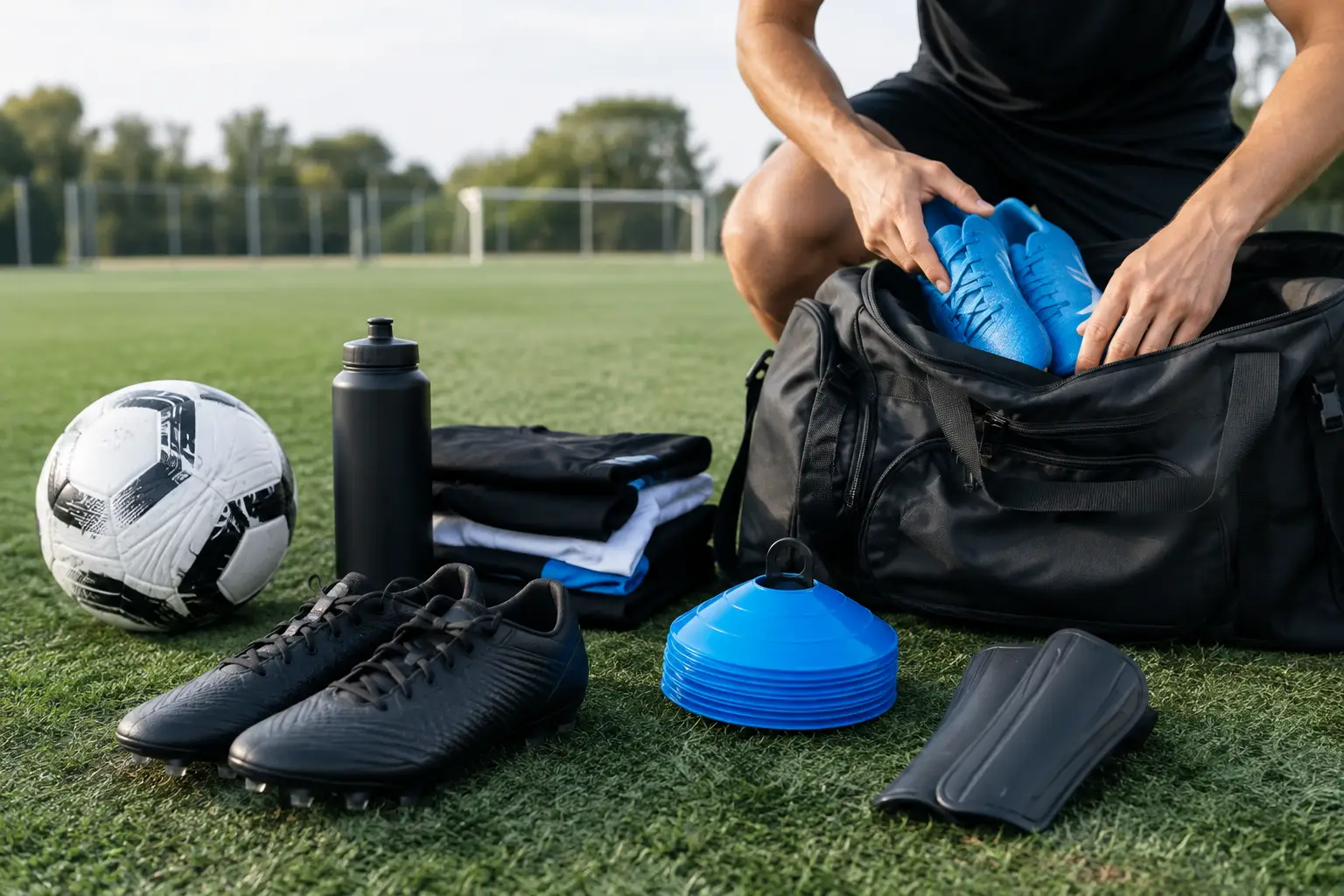
The session starts before the first ball is rolled out. Turning up without the right socks, a charged watch or a dry layer changes how you train. A reliable football kit bag checklist removes those avoidable distractions, so your focus stays on your touch, movement and decisions.
For players who train several times a week, packing should not be a scramble at 5 pm. Build a repeatable system around the conditions, the session plan and your own non-negotiables. The goal is simple: arrive ready, stay comfortable and leave with everything you need for the next session.
Football Kit Bag Checklist: The Core Gear
Your core gear should live in your bag or be replaced immediately after use. These are the items that affect whether you can train and play properly.
- Football boots: Check the studs before you leave. Firm-ground boots suit most dry natural pitches, while soft-ground or mixed-ground options may be needed after sustained rain. Bring boots that match the surface rather than forcing one pair through every condition.
- Grip socks and match socks: Secure socks help reduce movement inside the boot and support a more locked-in feel through turns, accelerations and strikes. Pack a spare pair if conditions are wet or you are heading from training straight into a match.
- Shin guards: They are required for matches and still make sense for intense drills, small-sided games or sessions where tackles are expected.
- Training kit: Shirt, shorts and appropriate base layers. Choose gear you can move freely in, not something that needs constant adjusting between repetitions.
- Water bottle: Start hydrated rather than relying on one bottle during a hard session. Refill it before you leave home.
- Towel and shower gear: Useful after evening training, gym work or wet-weather sessions. A small microfibre towel takes little room and dries quickly.
Keep these items in the same compartments every time. Boots in a ventilated section, clean clothing separate from wet gear, and smaller essentials in a zip pocket. When your gear has a place, you notice what is missing before you get to the ground.
Pack for the Session, Not Just the Sport
A centre-back preparing for a wet Tuesday night session does not need exactly the same bag as a winger playing a warm Saturday afternoon fixture. Your base kit stays consistent, but the final pack should reflect the work ahead.
For a technical session, bring a properly inflated ball if your team does not supply them, plus any individual equipment your coach has requested. For speed or conditioning work, add a light layer for the warm-up and a dry top for after training. For gym sessions, pack clean footwear and avoid wearing muddy boots through indoor spaces.
Goalkeepers need a separate check. Gloves, a spare glove pair in wet weather, glove wash or cleaning spray, and a towel are practical additions. A goalkeeper without dry gloves late in a rainy session is dealing with a preventable problem.
Match day requires more detail. Your team kit may be supplied, but do not assume every personal item will be available at the venue. Confirm the strip requirements, then pack backups where they matter: an extra undershirt, spare laces, a second pair of socks and a warm layer for the bench or post-match travel.
Weather Changes the Bag
Australian conditions can turn quickly, especially through winter. A clear morning can become a cold, wet evening by kick-off. Pack for the forecast, but give yourself a margin.
A lightweight rain jacket, warm top and spare dry socks are high-value additions when rain is likely. Put wet-weather gear in a separate waterproof pouch or plastic bag so it does not soak the rest of your kit. In hotter conditions, add sunscreen, electrolytes if you use them, and another bottle of water. Sun protection is performance preparation, not an afterthought.
Cold weather creates a different trade-off. Heavy layers can make your bag bulky, but standing around in damp kit after a match is worse. A warm top, track pants and dry shirt are usually enough to get you home comfortably without overpacking.
Small Items That Save a Session
The most frustrating omissions are often the smallest ones. They cost almost nothing to carry and can save your session when something breaks, rubs or runs flat.
Keep a compact essentials pouch in your football bag with:
- Spare boot laces
- Blister plasters and basic tape
- A small roll of strapping tape
- Nail clippers or a file
- Hair ties or headband if needed
- Deodorant and wet wipes
- A mobile charging cable or power bank
- Any required medication, such as an inhaler
This is not about carrying a full medical room. It is about covering the common problems that stop players from training comfortably. If you regularly tape your wrist, ankle or fingers, pack the tape yourself. Do not rely on a teammate having the right type or enough left.
A small notebook can also earn its place for players working on specific targets. Write down a coaching point, a movement cue or a post-session reflection while it is fresh. Your mobile can do the same job, but a notebook keeps you off notifications before training.
Keep Boots, Socks and Recovery Separate
A good bag setup protects your gear as much as it carries it. Boots collect mud, moisture and odour. Clean kit needs to stay clean. Recovery items should be easy to reach when you get home.
After each session, empty wet clothing as soon as possible. Leaving it in the bag until the next day makes the smell harder to shift and shortens the life of fabric. Remove insoles from boots if they are soaked, wipe off excess mud and let them dry naturally away from direct heat. A heater can stiffen materials and weaken glue.
Use one compartment or bag for boots, another for damp clothing, and a small pouch for valuables. If your bag does not have built-in sections, simple drawstring bags work well. The system matters more than the bag itself.
Recovery equipment depends on your routine. A snack with protein and carbohydrates, a recovery drink, massage ball or resistance band may be useful if you have a long trip home or another session coming up. Do not fill your bag with gear you rarely use. Carry the tools that support your actual training schedule.
Build a Pre-Departure Routine
The best checklist is one you follow without thinking. Set your kit out after washing, then use a quick check before leaving. Boots, socks, shin guards, water, training kit, weather layer, valuables. For matches, add your team strip, ID or registration requirements, and anything your coach has specifically requested.
Check your boots the night before a game instead of in the car park. Look for loose studs, damaged laces, split uppers and packed-in mud. Charge your mobile and watch if you use them for travel, timing or tracking. Fill your bottle shortly before departure so the water is fresh and cool.
If you travel with teammates, do not let that become an excuse to pack late. Shared lifts create tighter deadlines, and being the player who needs to turn back for shin guards is not a good start to a match day.
What to Leave Out
A performance bag should be prepared, not overloaded. Avoid carrying valuable items you do not need, loose rubbish, old wet kit and five different pairs of boots “just in case”. Extra weight and clutter make it harder to find what matters.
The exception is when conditions genuinely demand options. A tournament day, uncertain weather or a fixture on an unfamiliar surface can justify spare footwear and additional layers. Pack with a reason, not from habit.
Pro Pitch Football players know that preparation is part of performance. Set up your bag once, replace used items straight after each session, and your next training night starts with one less decision to make.