
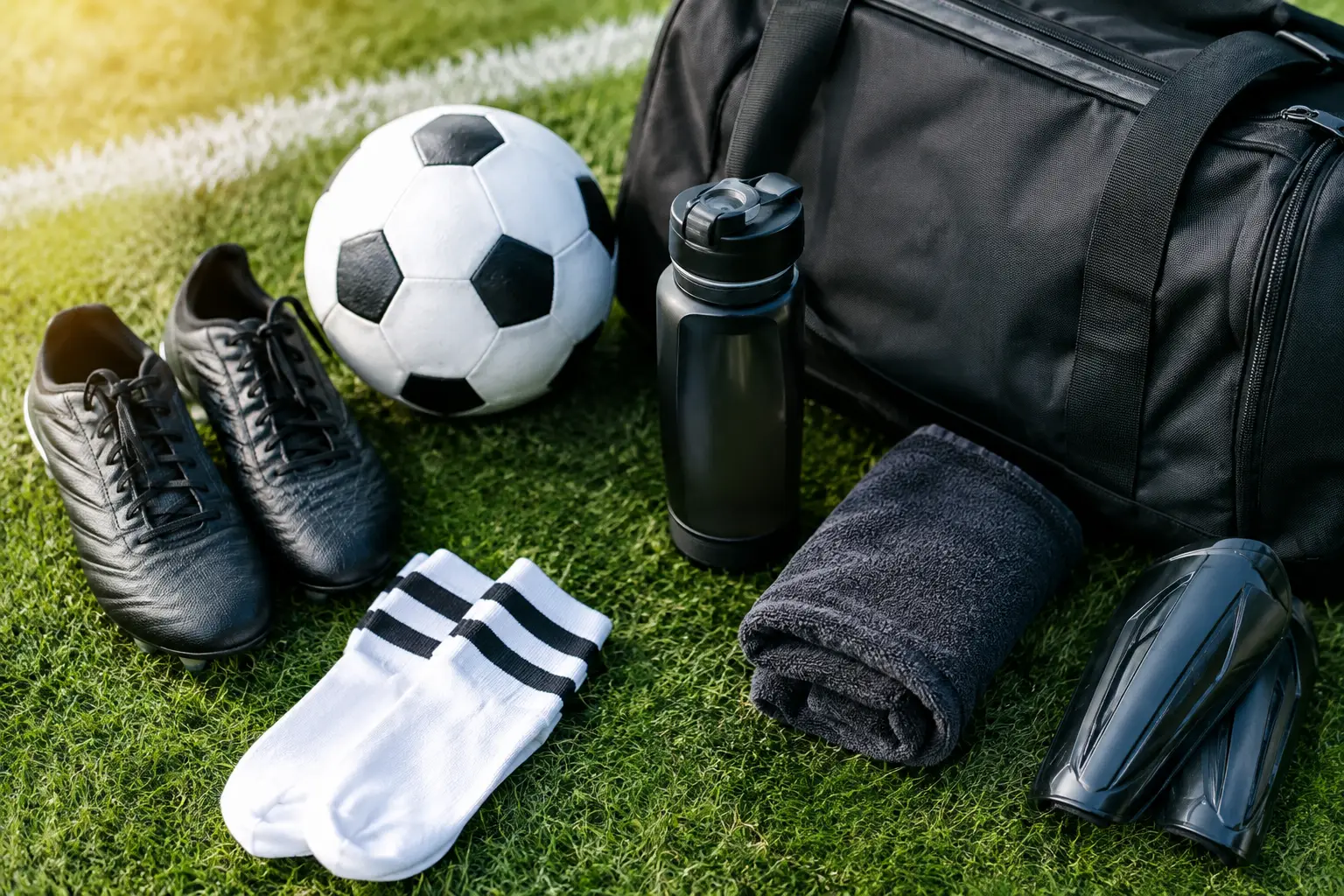
A forgotten pair of socks should not change how you feel in your first sprint. Yet match-day problems usually start before kick-off: wet boots left in the car, a missing shin pad, no drink bottle, or a kit bag packed in a rush. This football match day essentials list is built for players who want their gear sorted before they arrive at the ground.
Football match day essentials list: pack for performance
Your match bag does not need to be overloaded. It needs to cover the things that affect movement, comfort, protection and preparation. Pack it the night before, then use the same order every week. Repetition removes decisions when your focus should be on the match.
Boots, grip socks and match socks
Start with the equipment that connects you to the pitch. Your boots should suit the surface and be clean enough that studs can do their job. Check that laces are intact and that there is no split around the soleplate or upper. If rain is likely, do not rely on a pair of boots that is already soaked from training.
Grip socks belong in the same category. Secure movement inside the boot matters when you are accelerating, stopping, changing direction and striking through the ball. A grip sock can help reduce unwanted foot movement, but fit is still the priority. It should sit flat, feel secure through the heel and not bunch at the toes.
If you wear team socks over grip socks, pack both. Many players cut the foot from their club sock and use tape or a sock sleeve to create a clean match look. That setup works when it is permitted by your team and competition, but test it in training first. Match day is not the time to find out your tape slips or your sock combination creates pressure points.
Bring a spare pair of grip socks or standard socks. A second pair is useful after a wet warm-up, a muddy pitch or an unexpected delay. Small backups protect your comfort without filling your bag.
Playing kit and protective gear
Pack your shirt, shorts, match socks, shin pads and any required base layer together. Even if the club supplies kit on arrival, bring the items you are responsible for. Shin pads must fit securely and stay in place when you run. If they move during warm-up, adjust them before the team talk rather than hoping they settle once the match starts.
For cold conditions, a fitted long-sleeve base layer can help you stay warm without getting in the way. In hotter weather, the trade-off is heat retention. Choose layers based on the temperature, your position and how long you expect to be standing around before kick-off.
Goalkeepers need their own section of the bag: gloves, a spare pair if possible, goalkeeper shorts or pants, a towel and weather-appropriate layers. Damp gloves can change feel and grip quickly, especially on early-morning grass.
Water, fuel and recovery basics
Bring a full drink bottle, not an empty one you intend to fill later. Grounds do not always have accessible water, and shared taps are not a reliable plan. For most players, water is enough for a standard match, while longer tournament days or very hot conditions may call for an electrolyte option.
Your pre-match food should be familiar. Pack a simple snack you know sits well, such as fruit, a muesli bar, sandwiches or yoghurt, depending on timing and preference. Avoid turning match day into a nutrition experiment. Heavy, greasy food close to kick-off can leave you flat, while under-fuelling can affect concentration late in the game.
After the match, have a recovery option ready for the trip home. It does not need to be complicated. Food and fluids within a reasonable window help you begin recovering before your next session.
Check the conditions before you leave
The weather forecast and ground surface should shape your final choices. A firm, dry surface may suit one boot setup, while soft or wet grass may require another where regulations allow. Never wear a stud pattern you have not used before just because rain is forecast. Confidence in your footing comes from familiar equipment as much as the outsole itself.
Pack a light rain jacket for the sideline, plus a warm top for before and after the match. In Australia, an early start can be cold, then quickly turn warm. Keeping a dry layer in the bag is a practical move, particularly if you have a long drive or public transport trip afterwards.
Sunscreen is worth carrying for daytime fixtures. Apply it before you arrive rather than trying to do it as the warm-up starts. If your club requires a specific cap or outer layer for substitutes, add it to your regular routine.
Keep your warm-up gear separate
Your match kit should not be buried under recovery clothes, chargers and yesterday's training gear. Use a small internal bag or separate compartment for the items you need first: boots, socks, shin pads, water and warm-up layer. When the coach calls the team in, you should be able to change without emptying your entire bag onto the change-room floor.
A warm-up top, training tee and lightweight shorts can be useful when you prefer not to wear your full match kit too early. This depends on club routines and weather. The main point is to arrive ready to move. Do not spend the first ten minutes searching for a boot or borrowing tape.
Keep a small roll of sports tape in your bag if you regularly tape socks, wrists or minor areas as directed by a qualified practitioner. Tape is not a replacement for proper support, treatment or well-fitting gear. If you are managing an injury, follow your physio or medical professional's plan rather than copying a teammate's routine.
The small items that prevent avoidable stress
Some match-day essentials are not performance products, but they still matter. Keep your mobile, keys, wallet, player identification and transport details in one zipped pocket. If you use a mobile for team communication, charge it before leaving home. A portable charger can be useful on all-day tournament days, but it is not essential for every local fixture.
Add a plastic or waterproof bag for wet boots and dirty kit. It keeps mud away from clean clothes and makes the trip home easier. A small towel is useful for muddy legs, wet hands and damp boots. Deodorant, a spare tee and thongs are also practical if you are travelling home after showering at the ground.
For players who wear contacts, carry your case and glasses as a backup. If you need medication, make it a non-negotiable part of your bag check. These are personal requirements, so keep them consistent rather than relying on memory.
What not to pack
A match bag is not a storage locker. Too much gear makes it harder to find what matters, and clutter creates the same last-minute stress as forgetting something. Remove old tape, empty wrappers, damaged socks and gear that is no longer part of your routine.
Avoid breaking in new boots, new shin pads or a new sock setup in a competitive match. New equipment can be excellent, but only once you know how it fits over a full training session. Keep your match-day kit familiar, functional and ready for the conditions.
Build a repeatable night-before routine
Lay out your key items in the same order: boots, grip socks, club socks, shin pads, kit, water, fuel and outer layer. Then check the match location, kick-off time, transport and weather. This takes a few minutes and prevents the most common problem: arriving physically present but poorly prepared.
For committed players, gear preparation is part of performance preparation. Pro Pitch Football is built around that standard - secure fit, practical training gear and products that earn a place in the bag. Pack with intent, arrive early enough to settle in, and let your attention stay where it belongs: on the next action.