
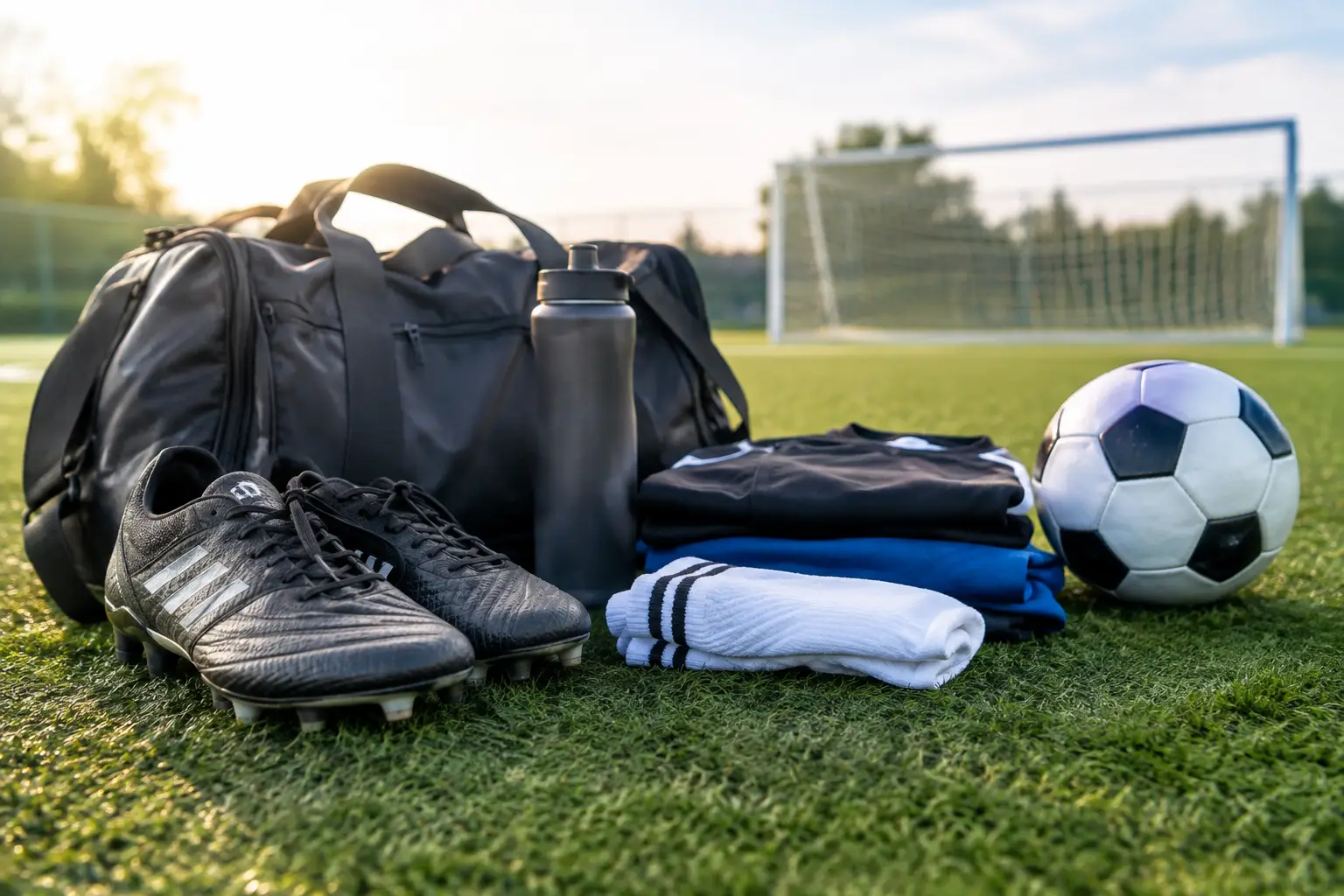
The first five minutes of a football trial can be enough to expose poor preparation. Turning up without the right boots, running low on water or dealing with slipping feet is avoidable pressure when coaches are assessing every action. Knowing what to pack for football trials lets you arrive settled, warm up properly and focus on the football.
Trials are not a normal training session. You may be asked to play multiple short games, complete physical testing, work in unfamiliar positions or wait longer than expected between activities. Your bag needs to cover performance, comfort and the practical details that stop a good day becoming a distraction.
What to pack for football trials: the core kit
Start with the gear you would trust for an important match. A trial is not the day to wear new boots for the first time, test a different sock setup or rely on equipment that has already started to fail. Pack proven gear that fits well and lets you move with confidence.
Bring these essentials:
- Football boots suited to the surface. Check whether the trial is on natural grass, artificial turf or a hard ground. Firm-ground boots are a common choice for grass, while turf shoes may be appropriate for synthetic surfaces. If conditions are uncertain, pack a second suitable option if you have one.
- Grip socks and football socks. Secure feet matter when you are accelerating, changing direction and striking the ball under fatigue. Pack at least one spare pair, especially if rain is possible or the session is scheduled across several hours.
- Shin pads. Even if the organiser does not specifically mention them, trials often include competitive small-sided games. Wear protection you are used to and make sure it stays in place.
- Training shorts and a breathable shirt. Take a spare top. A dry layer after the main session can make the trip home more comfortable and keeps you ready if coaches extend the trial.
- Water bottle and simple fuel. A full bottle is non-negotiable. Bring a refillable bottle where water access is available, plus a sports drink or electrolytes if heat and workload warrant it. Pack easy food such as a banana, muesli bar or sandwich for longer trial blocks.
- A small towel and weather layer. A towel helps with wet boots, muddy legs and sweat. Add a lightweight rain jacket for wet forecasts, or a warm top if you will be waiting around before or after your group.
Keep your gear organised. Put boots in a separate bag or plastic sleeve, store dry clothes away from wet kit and make sure you can find shin pads, tape and socks quickly. Looking prepared is not a substitute for playing well, but it helps you start the day with a clear head.
Get your boot and sock setup right
Your boots are not simply part of the uniform. They affect your traction, touch, balance and willingness to commit in tight spaces. Trials tend to create rushed decisions and awkward movements, particularly when players are trying to impress. A boot that is too tight, too loose or unsuitable for the ground becomes a problem fast.
Wear boots that are already broken in. New boots can look sharp, but blisters halfway through a session will affect your running and concentration. Check the studs before you leave, clean off old mud and make sure laces are in good condition. If you use a preferred lace style or ankle support routine, stick with it.
Your sock setup deserves the same attention. Feet sliding inside the boot can cost you stability during sharp cuts and first-time actions. Performance grip socks are designed to reduce internal movement and support a more secure fit. Pair them with your team or trial socks in the way you normally train, rather than changing the setup on the day.
If you are prone to blisters, pack sports tape, blister pads or any protective product you have successfully used before. The key word is successfully. Trial day is not the place for untested fixes.
Pack for the conditions, not the forecast alone
Australian weather can shift quickly, and football grounds can hold water, dry out hard or become windy even when the forecast looks manageable. Check the venue details the night before, including the surface, start time and whether changerooms are available. Then pack for one scenario beyond the expected conditions.
For a hot afternoon, bring extra water, sunscreen and a cap for waiting periods. You will not play in the cap, but it can reduce unnecessary sun exposure while you are listening to instructions or watching another group. Choose sunscreen that will not sting your eyes once you begin sweating.
For rain, spare socks and a dry shirt are often more valuable than an oversized jacket. Wet feet are uncomfortable and can make your boots feel less secure. Put your spare kit in a waterproof bag inside your football bag. For colder early-morning trials, layers are useful, but avoid turning up heavily dressed and stiff. Wear a warm top for the arrival, then remove it in time to complete a proper dynamic warm-up.
Do not overlook the trial-day admin
Coaches should be evaluating your ability, attitude and work rate, not chasing you for basic information. Read the organiser's email or registration message carefully. Some trials require photo ID, a signed form, medical details, payment confirmation or proof of registration.
Keep essential documents together in a clear sleeve or on your mobile, with screenshots available in case reception is poor at the ground. Bring your mobile charger or a power bank if you are travelling a distance or need to contact family after the session. If you have a medical condition, carry required medication and tell the relevant staff before activities begin.
Arrive early enough to park, find the correct pitch and deal with any registration process without rushing. That does not mean arriving an hour before your scheduled time and sitting still in the cold. Aim to be there around 20 to 30 minutes early unless the organiser gives different instructions. It gives you time to settle, use the bathroom, check your equipment and begin preparing physically.
What not to put in your football trial bag
Avoid overpacking items that create clutter or invite unnecessary attention. You do not need multiple pairs of fashion boots, loud accessories or a full recovery station for a single session. Coaches notice how you respond to the game, communicate and compete. They are not selecting players based on the size of their bag.
Leave valuables at home where possible. If you must bring keys, cards or a mobile, keep them in one zipped pocket and avoid leaving them unattended near the pitch. Do not rely on changerooms being locked or monitored.
Be careful with heavy food immediately before the trial. Pack fuel, but time it well. A large meal close to high-intensity running can leave you flat or uncomfortable. Eat a familiar meal a few hours beforehand, then use a light snack if needed. Hydrate steadily through the day rather than trying to drink a large amount just before kick-off.
Build a routine you can repeat
The best trial bag is one you can pack without thinking. Create a simple pre-trial routine the evening before: clean your boots, fill your water bottle, check your socks and shin pads, prepare your food, and place documents and valuables in the same pocket every time. This reduces the chance of missing something when nerves are already high.
Once your kit is sorted, leave room for the parts of preparation that cannot go in a bag. Get proper sleep, eat familiar food, arrive ready to listen and play with intent. A strong trial is rarely about doing something spectacular every minute. It is about showing reliable touch, work rate, decision-making and composure when the game speeds up.
Pack the equipment that supports those qualities, then let your football do the talking.